Abstract
Maternal deaths and complications remain disproportionately high among African American women during pregnancy and the postpartum period in Georgia. Access to and continuity of care vary significantly depending on geographic location. This practicum comprised three projects, including a needs assessment and research component. Quantitative and published qualitative data were analyzed to develop an outreach strategy, solution, and action plan for maternal health.
Relevant research articles addressing this issue were also collected. The methods employed included constructing an evidence, needs, and assets matrix in Excel; conducting descriptive analyses; coding qualitative data; analyzing relevant policies; and evaluating investments in health information technology. Identified contributing factors to disparities in access were racism, the decline of rural healthcare infrastructure, provider shortages, transportation barriers, scheduling challenges, cost, referral inefficiencies, and insufficient respectful care. Due to the absence of direct stakeholder interviews, the qualitative analysis was based on published studies and publicly available organizational information and does not present original community findings. The recommended intervention is a locally adapted pilot program that integrates community navigation, opt-in doula or community health worker support, transportation and flexible scheduling, closed-loop referrals, risk-stratified postpartum follow-up, optional remote blood pressure monitoring, and mechanisms to ensure accountability for respectful care.
Evaluation metrics should encompass reach, continuity, referral completion, patient experience, rural-urban equity, workforce burden, cost, and sustainability. Collectively, these projects demonstrate proficiency in data analysis, interpretation, needs assessment, economic policy analysis, and health information technology investment.
Keywords: Black maternal health, Georgia, prenatal care, postpartum care, health equity, healthcare access
Introduction
Georgia exhibits significant racial disparities in maternal mortality, severe maternal health complications, and access to quality prenatal and postpartum care. Race is not attributable to biological differences; rather, it is a socially and politically constructed category. Consequently, Black individuals have been shown to experience disproportionately negative effects from poverty, limited access to healthcare, and lower quality of care (Hailu et al, 2022; Taylor, 2020). Given the intersection of race with these systemic issues, Georgia serves as an important context for further study. Additional contributing factors include maternity unit closures, shortages of healthcare providers, transportation barriers, and insufficient local healthcare resources. This remote practicum was completed with Coregulation Health Institute (CHI), a nonprofit organization in San Diego, California, that develops education and resources related to emotional safety, connection, mental health, and well-being. Although CHI’s primary mission is broader than maternal healthcare, the practicum aligns with the organization’s interest in how individual experience, social connection, institutional conditions, and community health interact. The project provides CHI with an equity-centered model for moving from a broad public health concern to evidence synthesis, practical recommendations, and measurable implementation indicators.
The priority population is Black pregnant and postpartum women in Georgia, especially women living in rural or medically underserved areas, enrolled in Medicaid, facing transportation or childcare barriers, residing in areas with maternity-care provider shortages, or managing chronic conditions such as hypertension, diabetes, or cardiovascular disease. The postpartum period is defined as the first year after pregnancy, not a single six-week visit, because pregnancy-related risk continues well after delivery (Kondracki et al., 2024).
Purpose and Research Questions
The objective of this practicum was to identify the principal social, economic, geographic, and healthcare-system barriers affecting prenatal and postpartum care among Black women in Georgia; to analyze available quantitative and qualitative evidence; to identify community and system assets; and to develop feasible, equity-centered recommendations for outreach, implementation, policy, technology, and evaluation.
The primary research question addressed which barriers most strongly affect prenatal and postpartum healthcare access among Black women in Georgia, and which strategies could feasibly improve access, continuity, experience, and quality. Supporting questions examined racial and geographic inequities, transportation, insurance, provider availability, scheduling, employment, childcare, racism, communication, trust, existing services, implementation resources, and meaningful measures of success.
Project Structure
The practicum consisted of three integrated projects. Project 1 developed a maternal health needs assessment and research foundation. Project 2 analyzed quantitative indicators and published qualitative evidence concerning disparities and access. Project 3 translated the findings into an outreach, solutions, economic-policy, health-information-technology, implementation, and evaluation brief. These projects were designed to complement one another: the needs assessment defined the problem and assets, the analysis interpreted the evidence, and the implementation brief connected findings to action.
Competency Plan
Foundational Competency 3
Quantitative data, including rates of death, morbidity, location, and time, were collected, sorted, and analyzed. Qualitative data was coded into themes such as provider access, cost, transportation, childcare, trust, discrimination, communication, respect, continuity, and community assets. Data extraction was conducted using Excel. The data was summarized, organized into a matrix, coded, and prioritized. Coding of themes followed established guidelines (Byrne, 2022).
Foundational Competency 4
Data relevant to this project was reviewed, including information on access, continuity, services, race, outreach, and evaluations. The data was insufficient due to limited duration, vague definitions, and other contributing factors. These limitations may have affected the findings. It is important to note that descriptive results do not imply causality.
Foundational Competency 7
Barriers, assets, and needs were identified, including available organizations, services, workforce capacity, and existing gaps. Evidence specific to Georgia was utilized.
Generalist Competency 4
Project 3 examined Medicaid postpartum coverage, reimbursement, nonemergency transportation, doula and community health worker payment, workforce investment, paid leave, childcare burden, and clinic financing as mechanisms that may reduce or reinforce disparities in healthcare access.
Generalist Competency 5
Project 3 compared remote blood-pressure monitoring, telehealth-supported follow-up, electronic referral tracking, appointment reminders, patient portals, and equity dashboards in terms of purpose, users, staffing, training, workflow, interoperability, privacy, digital access, cost, sustainability, and measurable benefit.
Methodology
A focused, mixed-source public health assessment was selected to connect published evidence, population needs, stakeholder knowledge, policy, and implementation in a feasible manner. The assessment was not conducted as a systematic review or original population-level study. Searches prioritized peer-reviewed U.S. research published within the past 10 years, with Georgia-specific studies receiving the greatest emphasis. Search concepts included Black maternal health, Georgia maternal mortality, severe maternal morbidity, prenatal access, postpartum continuity, rural maternity care, obstetric-unit closure, Medicaid, transportation, structural racism, respectful maternity care, doula care, community health workers, patient navigation, telehealth, and remote monitoring.
Studies were included if they addressed maternal mortality or morbidity, access, service capacity, patient experience, or relevant interventions; described a discernible method; and applied to Georgia, the U.S. South, or comparable U.S. populations. Authoritative government or organizational sources were used for current policy, program, surveillance, or service information when peer-reviewed studies were unavailable. Opinion pieces, commercial claims, and sources lacking methodological relevance were excluded.
Evidence Organization and Analysis
Sources were organized in an Excel evidence matrix containing the APA citation, design, population, setting, principal findings, limitations, and relevance. Quantitative findings were summarized as reported by the original authors; incompatible definitions, populations, or periods were not combined—a needs-and-assets matrix compared documented barriers with existing or potential Georgia resources. Published qualitative findings were extracted into a preliminary codebook, grouped into themes, reviewed for convergence and contradiction, and compared with quantitative and geographic evidence.
Stakeholder Inquiry and Methodological Safeguards
The original plan allowed five to eight purposively selected key informants representing clinical care, midwifery, doulas, community health workers, nonprofit organizations, rural or federally qualified health centers, public health, and payment or policy. We attempted outreach to Black Mamas Matter Alliance and Helping Mamas but did not complete direct interviews. Therefore, this report does not present communications with organizations as research findings or imply that community perspectives were collected. Project 2 instead uses published qualitative evidence and public organizational information. Any future interviews would require appropriate organizational or university determination, consent, confidentiality, attribution, recording, storage, and data-use procedures.
Solutions Policy and Technology Assessment
Potential interventions were compared using strength of evidence, equity, acceptability, feasibility, reach, resource requirements, sustainability, privacy, and measurability. Economic- policy analysis examined how coverage, reimbursement, transportation, workforce, and financing distribute benefits and burdens. The technology assessment emphasized that technology should support a staffed and accessible care pathway rather than replace human services. Ethical safeguards included minimizing identifiable information, protecting small cells, offering non-digital options, documenting uncertainty, and avoiding race as a biological explanation.
BMMA Framework and Community-Informed Rationale
The Black Mamas Matter Alliance has identified four goals in its efforts to address maternal health. These goals include policy changes, research, improved maternal care, and cultural change. Meanwhile, they promote the needs of Black women, their right to have children, human rights, their communities' knowledge, and culturally appropriate maternal care (Black Mamas Matter Alliance [BMMA], 2018, 2026a). This framework can guide our assessment of what our Georgia facility needs. Using BMMA as a guide, we can determine whether our facility is owning its responsibility, what resources are accessible in our area, whether care is respectful, and what our community can accomplish, instead of placing blame on the patient.
BMMA held an information session on the 9th of November 2026 that discussed courses being offered to educate others. BMMA offers many courses, such as trauma-informed care, loss of pregnancy, environmental and reproductive justice, and heart health. This information can inform my research as I develop a needs assessment and identify ways to reach out to my community. I will not use this as interview data or as a credible source. (BMMA, 2026c)
Project 1: Maternal Health Needs Assessment and Research Development Population Need
Significant racial disparities exist in maternal mortality and severe morbidity. Non-Hispanic Black women are approximately three times more likely than non-Hispanic White women to die from pregnancy-related complications (Hernandez et al., 2023). Rates of severe maternal morbidity increased from 2009 to 2020, with higher rates observed among Black women compared to White women (Kramer et al., 2023). Pregnancy-related mortality also varied by race, independent of education level (Petersen et al., 2019).
Consequently, multiple factors associated with health care delivery systems warrant investigation. Access is the geographic accessibility of essential services. Hernandez et al. (2023) reported that 76 of Georgia's 159 counties lacked an obstetrician-gynecologist during 2017-2018. Daymude et al. (2022) identified nine rural Georgia labor-and-delivery unit closures between 2012 and 2016; affected service areas included higher proportions of Black women and patients covered by Medicaid, self-pay, or other government insurance. These figures describe earlier periods and should not be treated as a current 2026 facility inventory. Nevertheless, they establish a documented pattern of service loss and support updates to county-level information on delivery facilities, prenatal and postpartum providers, certified nurse-midwives, federally qualified health centers, transportation, and telehealth capacity.
Postpartum Continuity and Clinical Risk
After a woman gives birth, she is still at risk for complications. A study by Kondracki et al. (2024) showed that 129 pregnancy-related deaths occurred in Georgia between the years 2016 and 2019. Of these deaths, 23.3% happened while the woman was pregnant and 48.8% occurred within the first 60 days after giving birth. Causes included cardiomyopathy, hemorrhage, and cardiovascular/coronary disease. Patients need to be seen as soon as possible after birth, be monitored for their specific diagnosis, know their warning signs, be able to escalate their care, and have continuity of care throughout the first year postpartum. Having one follow-up visit is not enough to ensure continuity.
Structural Racism Respect and Trust
Thompson et al. (2022) looked at structural racism in sexual and reproductive health. Structural racism can be displayed through employment, money, insurance, communication, providing care, and trust in Black women in Georgia and North Carolina. Just having access to care does not mean you are getting quality care. Hailu et al. (2022) showed that structural racism affects mothers’ negative outcomes. Montalmant and Ettinger (2024) stated that structural racism and implicit bias can affect maternal health.
Additionally, Patel et al. (2024) identified inequities in the delivery of respectful maternity care. They require enhanced listening, communication, escalation pathways, and accountability mechanisms. Increasing the frequency of visits alone will not resolve these systemic issues.
Economic and Practical Barriers
Insurance coverage does not necessarily ensure practical access to care. Individuals may possess insurance yet remain unable to obtain services due to provider distance, unreliable transportation, scheduling conflicts with employment, lack of childcare, or non-acceptance of insurance by providers. Economic burdens include lost wages, transportation costs, childcare expenses, and unpaid leave. These barriers, compounded by rural distances and limited appointment availability, render missed encounters a foreseeable consequence of systemic design rather than an indication of patient disengagement.
Community Assets and Capacities
Georgia has numerous potential assets, including federally qualified health centers, local county health departments, perinatal systems, Medicaid, nurse midwives, doulas, community health workers, home visitation programs, maternal health coalitions, faith-based organizations, transportation services, telehealth, and family support programs. Black-led maternal health and reproductive-justice organizations are particularly significant, as community priorities should not be determined exclusively by health systems. The primary gap appears to be fragmentation rather than a complete lack of resources. Consequently, this assessment focuses on referral pathways, organizational capacity, eligibility requirements, and the extent to which patients receive the services they are referred to. Black-led maternal health and reproductive-justice organizations are particularly important because community priorities should not be defined solely by health systems. The principal gap may be fragmentation rather than the total absence of resources; therefore, the assessment emphasizes referral pathways, organizational capacity, eligibility requirements, and whether patients actually receive the referred service.
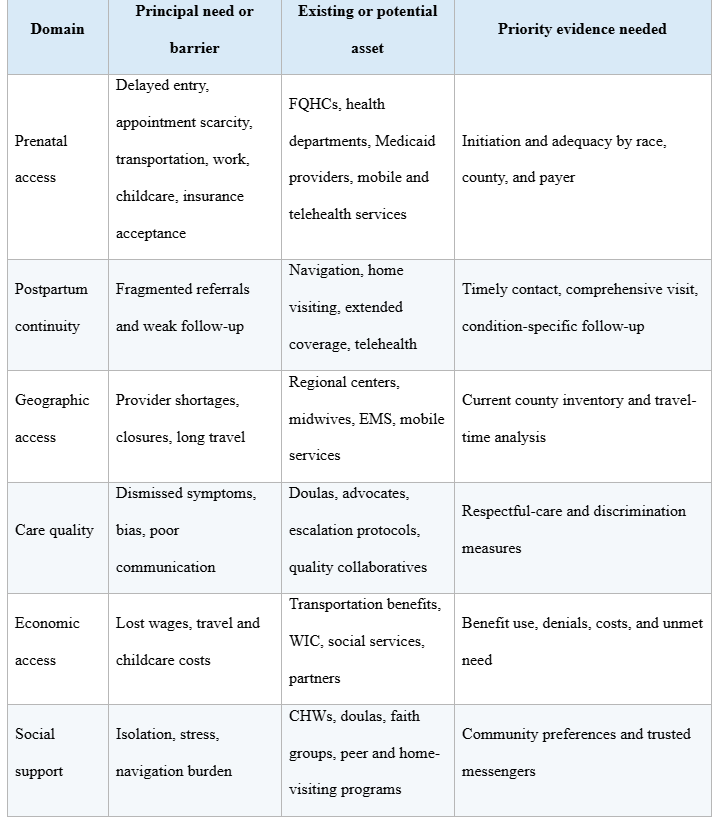
Needs and Assets Matrix
Table 1 summary of primary factors identified in Project 1.
Conclusion of Project 1
Project 1 establishes that Georgia’s Black maternal health inequities arise from interacting structural, geographic, financial, and healthcare-delivery conditions rather than one isolated cause. It also identifies capacities to strengthen rather than duplicate. The artifact demonstrates Foundational Competency 7 by assessing population needs, assets, and capacity, and it supports Foundational Competency 3 by organizing quantitative and qualitative evidence for analysis.
Additional Domains in Community and Environmental Health
The needs-and-assets matrix should include community-led doulas and midwives, access to bereavement and mental-health services, experiences of birth trauma, exposure to environmental hazards, and availability of culturally responsive educational resources. BMMA’s holistic-care framework supports examining these dimensions alongside geographic access, insurance, transportation, and provider availability (BMMA, 2018). These are proposed assessment domains; the webinar did not provide new Georgia-specific prevalence estimates or original stakeholder findings.
Project 2 Data Analysis and Maternal Health Disparities Assessment Quantitative Findings
Several quantitative studies have shown disparities in maternal outcomes between Black and white mothers. These include Hernandez et al. (2023) on maternal death, Kramer et al. (2023) on state-level severe maternal morbidity, and Petersen et al. (2019) on pregnancy-associated mortality. None of these studies found that disparities disappeared when controlling for mothers’ education level. This therefore points towards some other exposure(s), access to and/or receipt and quality of care as possible contributors to the disparity.
Furthermore, some of the literature gives clues to contributing factors. Daymude et al. (2022) observed that rural hospitals/birth centers were more likely to close in areas with larger populations of Black patients and higher rates of public/other insurance. Hernandez et al. (2023) describe workforce and facility shortages in counties, and when considered alongside the present findings, longer travel time, difficulty securing appointments, and fewer local facilities each compound disadvantage by race and income. While these cannot be attributed directly to a specific closure, there is clearly room for improvement.
In addition, many of these adverse outcomes occur after delivery. Kondracki et al. (2024) identified that >50% of pregnancy-related deaths occurred within 60 days of pregnancy and continued through the following year. Therefore, it is important to assess more than whether patients attended their (first) postpartum appointment. This can include receipt of early postpartum care, blood pressure monitoring (for hypertensive diseases of pregnancy), follow-up after referrals, broader postpartum care, use of emergency facilities, readmissions, and patient awareness of red flags.
Published Qualitative Findings
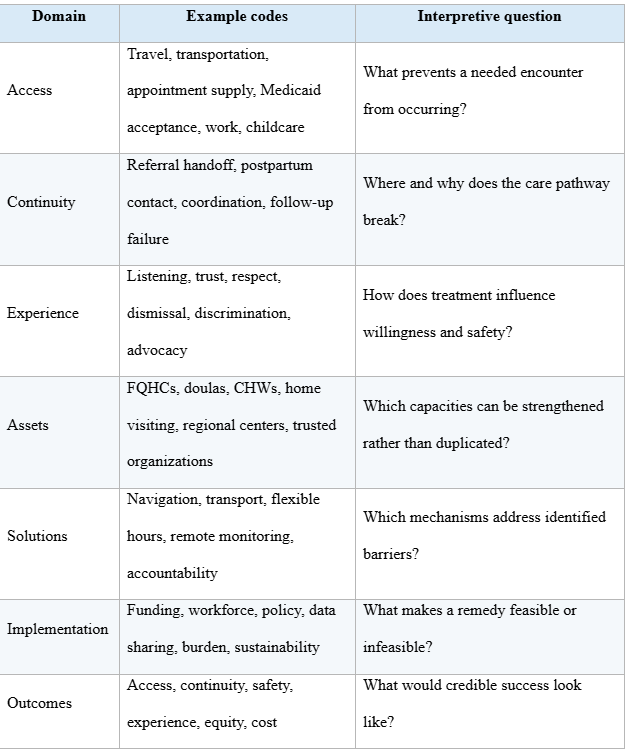
Qualitative and patient-experience evidence provides context for the quantitative patterns observed. Thompson et al. (2022) identified racism as influencing employment, finances, insurance, interpersonal communication, and clinical treatment. Saluja and Bryant (2021) described how implicit bias affects clinical encounters and contributes to inequities. Patel et al. (2024) documented disparities in respectful maternity care. Across these sources, recurring concerns included being heard and believed, respectful communication, trust, advocacy, affordability, geographic availability, and continuity of care.
The analysis identified seven thematic domains: access, continuity, patient experience, community assets, solutions, implementation conditions, and outcomes. Within the access domain, key codes included travel distance, transportation, appointment availability, Medicaid acceptance, employment, and childcare. Continuity codes included referral handoffs, postpartum contact, care coordination, and follow-up failures. Experience codes addressed listening, trust, respect, dismissal, discrimination, and advocacy. Implementation codes included funding, workforce, policy, data sharing, administrative burden, and sustainability.
Triangulation of Findings
Quantitative and qualitative sources converged in several key areas. Geographic shortages and facility closures corresponded with published descriptions of practical access barriers. The timing of postpartum mortality was consistent with concerns regarding fragmented follow-up.
Racial inequities in outcomes were aligned with studies documenting disrespect, dismissal, and structural racism. Additionally, the sources highlighted a critical distinction: availability, acceptability, and continuity represent separate dimensions of care. A service may exist but remain geographically inaccessible, financially prohibitive, culturally unsafe, or disconnected from subsequent steps in care.
Interpretation for Practice
The findings do not support a single educational campaign, telehealth platform, transportation voucher, or bias-training course as a complete remedy. Education cannot address provider shortages, and technology cannot resolve staff shortages or a lack of an escalation pathway. Training completion does not establish that patients are heard or that symptoms are escalated consistently. The evidence instead supports coordinated interventions that connect clinical care, navigation, practical supports, community partnerships, and accountability.
Community health worker and navigation interventions may improve connection to care and selected maternal and child health outcomes, although heterogeneity limits strong causal conclusions (Scharff et al., 2022). In a randomized trial among at-risk Black pregnant women, Svikis et al. (2022) found no significant improvement in prenatal visits or maternal and infant outcomes. However, they did identify greater postpartum visit attendance in the navigation-plus- incentive group. The appropriate conclusion is that navigation may improve connection and postpartum utilization, not that navigation alone reduces maternal mortality.
Doula care may improve selected birth, postpartum, and experience outcomes, but program designs and evidence quality vary (Falconi et al., 2022; Sobczak et al., 2023). Equitable implementation requires payment for prenatal and postpartum visits, travel, on-call time, documentation, training, and supervision. Doulas should remain accountable to the birthing person and supplement, rather than replace, licensed clinical care.
Project 2 Limitations and Conclusion
Project 2 relies on secondary sources. Administrative data may misclassify conditions, omit barriers, and use inconsistent definitions. Small subgroup estimates may be unstable or suppressed. Qualitative studies provide depth but cannot be treated as prevalence estimates.
Because direct stakeholder interviews were not completed, the report distinguishes published evidence from community input and does not fabricate local findings. Despite these limitations, convergence across Georgia-specific, national, quantitative, and qualitative evidence provides a credible basis for preliminary recommendations. Project 2 demonstrates Foundational Competency 3 through structured quantitative and qualitative analysis and Foundational Competency 4 through interpretation for public health practice.
Interpretation of BMMA Workforce-Development Learning
The November 2026 BMMA session highlighted hypertensive disorders of pregnancy and the relationship between pregnancy complications and long-term cardiovascular risk. These themes strengthen the rationale for risk-stratified postpartum follow-up, patient education, and referral continuity. ACOG recommends early postpartum contact and individualized ongoing care, including timely blood-pressure assessment for patients with hypertensive disorders (American College of Obstetricians and Gynecologists [ACOG], 2018). The webinar’s stated numerical attribution of maternal deaths to hypertensive disorders is not reproduced here because its precise denominator and source were not established independently. (BMMA, 2026c).
Project 3 Maternal Health Outreach Solutions and Implementation Brief Recommended Integrated Strategy
Project 3 recommends implementing the above elements as part of a combined pilot study, rather than in isolation. By offering navigation, opt-in doula/CHW support, transportation assistance, flexible access to appointments, closed-loop referrals, targeted postpartum follow-up (with potential for home-based BP tracking), and tracking and accountability for respectful care, we propose augmenting and enhancing existing services. The proposed bundle should be further developed with input and fair compensation for community members before adoption.
Community-Based Navigation
Navigators/CHWs would accompany and assist study participants from pregnancy to at least 1 year postpartum. They would assist with needs assessment and resource connections (e.g., transportation, childcare, benefits), appointment setting, education, identifying and escalating concerns to the care team, warm handoffs to care providers and community resources, and maintaining up-to-date resource directories with referral closure. They would not be assumed to assume or replace clinical management by a licensed provider.
Community-based Doula/CHWs
Individuals should be offered the option of doula or CHW services. Doulas provide education, support, and/or advocacy throughout pregnancy, labour/birth, and postpartum. CHWs can help individuals connect to medical care and other social resources. These services should be offered irrespective of ability to pay. Payment for doulas/CHWs should be commensurate with all services they may provide. Outcomes should be expanded to consider service uptake, experience, continuity, and workforce sustainability.
Transportation/Flexible Access
Providing transportation assistance in the form of vouchers will likely be insufficient to address the combination of transportation, work, and childcare. Additional efforts to improve access should be determined in collaboration with the local community. They may include facilitating use of Medicaid transportation benefits, providing gas cards/Uber/other acceptable resources, offering evening/weekend visits, providing concurrent mother-child visits, and providing mobile clinics in communities with need. Closed-loop referral system as above. Outcome metrics: number of transportation events provided, number of no-shows, distance traveled, referral closure, cost to complete visit and service delivery to rural locations.
Postpartum Follow-up
Patients should receive early follow-up contact, individualized postpartum plan of care, and timely follow-up for individual indications. For those with hypertensive disease and feasible to support remotely, patients should be provided a home-based validated BP cuff with a simple means to report values, with clear criteria and prompt escalation to their care team. This should be offered as an option, not a required follow-up mechanism, and alternatives should be available to ensure patients with limited internet access, equipment access, language barriers, mobility/disability, and limited digital health literacy are not excluded.
Remote monitoring facilitated higher rates of BP ascertainment within 10 days post-discharge than office-based monitoring (91.7% vs. 58.4%; Arkerson et al., 2023) and reduced race-based differences in BP ascertainment between Black and White patients. Implementation would require adequate staffing to review and escalate remote monitoring readings to clinicians and should be considered as an adjunct to the overall clinical care.
Measurement of Respectful Care
Efforts to educate providers about implicit bias, structural racism, trauma-informed care, and shared decision-making should be paired with institutional mechanisms. Suggested measures include standardized approaches to symptom escalation, the ability to contact an advocate, a confidential patient-reported experience survey, expedited responses to patient complaints, data dashboards for leadership, and community involvement in review and response. Completion of education is an important indicator, but outcomes of interest will include patient experience (do patients feel their concerns are addressed?), consistency of escalation, response and closure of complaints, and changes in disparities.
Economic Policies
Economic policies will affect who can access care and how it is funded. Medicaid coverage of postpartum care extends coverage, but access to providers, transportation, paid leave, and referral closure will require further interventions. Reimbursement for doulas/CHWs will affect their ability to build a sustainable career. NEMT can reduce travel barriers, but it is limited by administration and availability. Financial support for clinics/health systems is needed to allow them to increase hours and offer navigation/coordination and postpartum services. The focus should be on improving payment for services to reflect better continuity of care and reduce inequities, including fair payment for doulas/CHWs, navigation and referral closure, postpartum contact, and review of remote monitoring and care coordination. It should not encourage unnecessary technology purchases or increase referral rates without improved access, visit completion, experience, and/or linkages. Policy changes to paid leave and childcare are also critical.
Health Information Technology
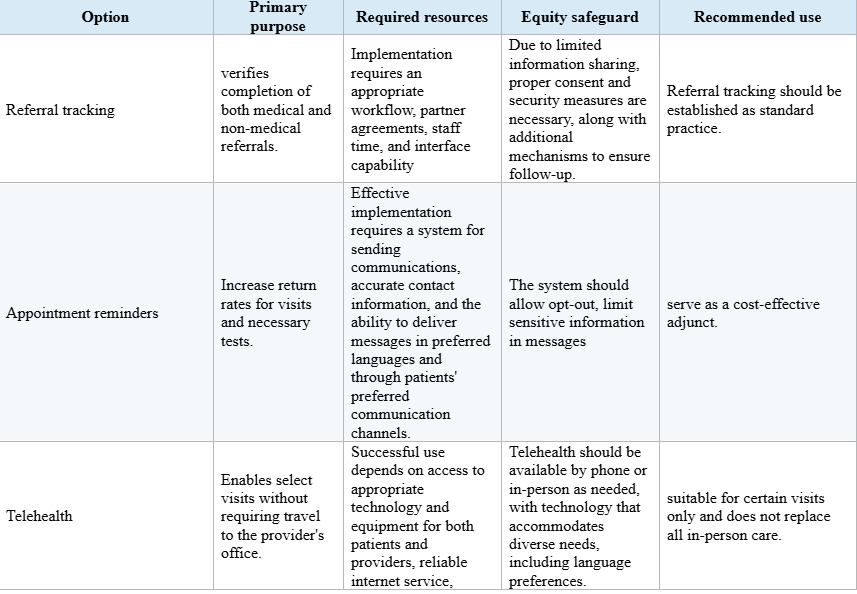
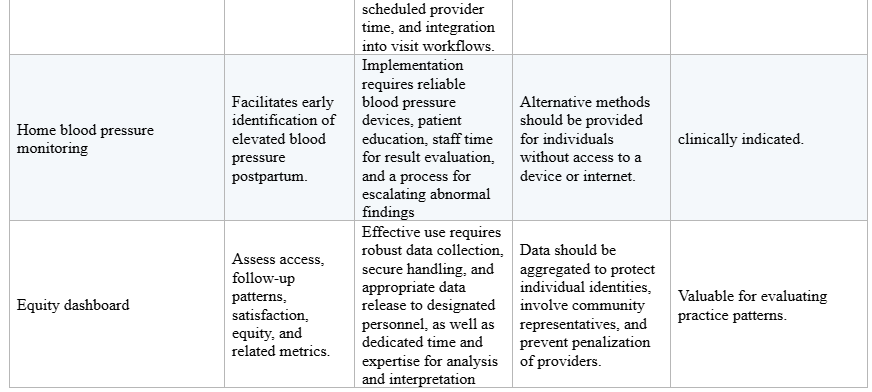
Various tools may be adopted but should be considered with specific goals and problems to solve in mind. Tracking and referral closure are helpful when working with many partner agencies. Appointment reminders can help reduce no-shows if phone numbers/email are current and the patient consents to communications. Telemedicine can reduce transportation barriers where appropriate, but it will not substitute for all clinical visits (e.g., physical exams, ED visits, or when there is no local capacity). Remote monitoring of BPs may benefit eligible patients, with appropriate staffing to act on the results. Dashboards to monitor equity can help identify variations in uptake/referral closure/experience. However, they must be accompanied by small- number suppression, data controls, and review of individual cases to avoid adverse effects.
Table 2 summarizes Health Information Technology Investment Assessment
Outreach and Community Engagement
Outreach initiatives are most effective when utilizing trusted spokespersons and clear, accessible information. Potential partners include organizations focused on Black women's and infants' health, doulas, community health workers (CHWs), federally qualified health centers (FQHCs), health departments, churches, Medicaid plans, hospitals, and similar entities. Compensating Community Advisory Board members for their input on messaging, service promotion, recruitment strategies, and feedback collection may enhance engagement. With proper authorization, groups may also conduct listening sessions and individual interviews.
Materials to consider developing: a community-facing resource list (plain language), a professional referral sheet, short-form digital content, and a professional fact/implementation sheet. These materials must clearly explain how to access assistance, relevant contacts, anticipated processes, and privacy protections. Dissemination to community audiences should prioritize actionable steps and available services, while dissemination to professional audiences should focus on evidence, implementation requirements, workflow, and evaluation.
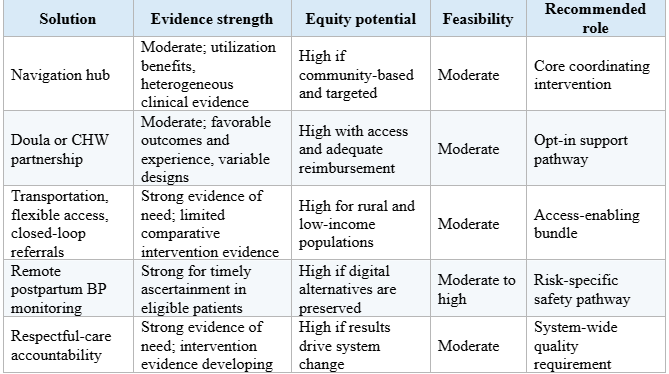
Solution Prioritization
Table 3 presents the preliminary prioritization. Evidence strength reflects the focused literature reviewed for this practicum and is not a formal GRADE assessment.
Implementation Plan
A subsequent step would be to undertake a 12-month pilot in a single rural/medically underserved region and an urban safety net region. We aim to augment and bridge current care for pregnant patients and not create an entirely new care model. Proposed Implementation Plan
• Co-design (Months 1-3): Settle on the pilot areas, extend the current asset mapping, convene a paid community advisory committee, map out referral pathways and gaps, and set the privacy and escalation processes.
• Develop (Months 3-5): Recruit & train navigators; build referral arrangements; secure transport and doula arrangements; establish privacy safe information capture; establish baseline.
• Months 6-12: Recruit study enrollees, implement navigation and opt-in, establish postpartum follow-up and BP check-in pathway, monitor equity-related metrics monthly.
• Months 10-12: Obtain participant and study team/partner input; evaluate pilot reach, acceptability, feasibility, cost, participant burden, and unintended consequences. Decide on any modifications and/or whether to continue or cease each component.
Pilot Evaluation Framework
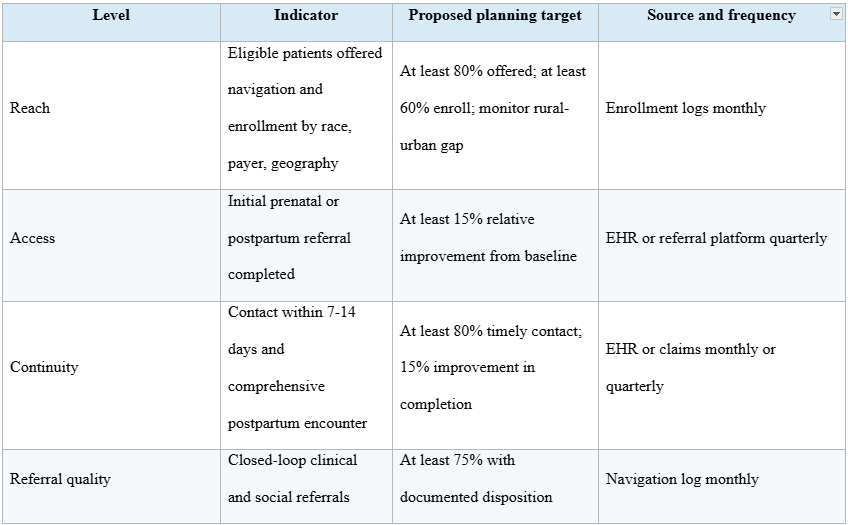
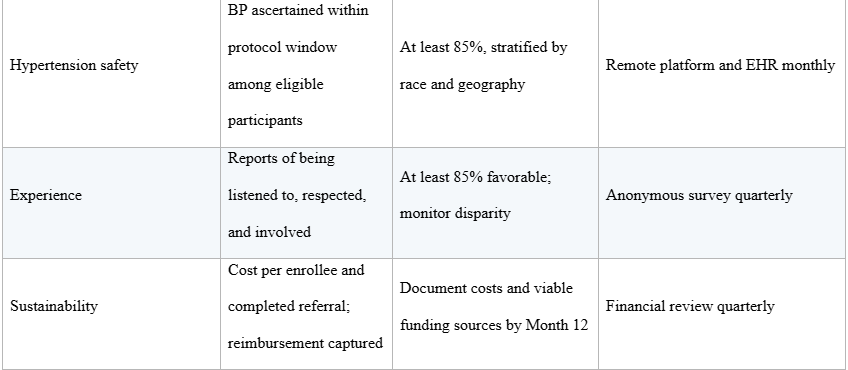
The pilot evaluation should prioritize feasible process measures and intermediate outcomes. Maternal mortality is not recommended as the primary outcome due to its rarity, the need for a larger sample size and extended follow-up, and the lack of timely implementation feedback. Table 4 outlines proposed planning targets, which will be finalized with participating sites following baseline assessment.
Table 4
Proposed Pilot Evaluation Framework
Ethical and Equity Safeguards
• Obtain written determination regarding human-subject’s requirements before recruitment or primary data collection.
• Use clear consent or participant-information procedures and do not record interviews without permission.
• Minimize identifiable information, separate contact information from analytic records, and define retention and deletion schedules.
• Compensate community expertise when permissible and share findings in plain language.
• Stratify measures to identify inequity while suppressing small cells and protecting confidentiality.
• Provide non-digital alternatives and accessibility accommodations.
• Monitor technology exclusion, referral overload, surveillance burden, and workforce burnout as potential unintended effects.
Project 3 Conclusion
Project 3 translates the evidence into an integrated, testable strategy. It demonstrates Foundational Competency 4 by interpreting evidence for practice and evaluation, Generalist Competency 4 through analysis of financing and reimbursement mechanisms, and Generalist Competency 5 through comparison of technology investments and safeguards. The principal recommendation is to test a coordinated care pathway with community governance and transparent equity measures rather than invest in disconnected services or technology.
BMMA-Informed Outreach and Evaluation Additions
The recommended approach involves implementing a Georgia-based pilot that brings together Black women-led organizations, doulas, community health workers, and representatives from healthcare providers and public health agencies. This coalition would collaboratively determine the most effective key areas and communication strategies for reaching and supporting the target population. Potential focus areas include education on respectful care, awareness of perinatal trauma and grief, identification of hypertensive crises, cardiovascular care after delivery, and education on relevant environmental exposures. Participation in future collaborations would remain open to these entities, contingent upon the development of ongoing partnerships.
It is further recommended that future evaluations of similar interventions incorporate assessment of respectful care and co-decision making, tracking of patient referrals and linkages to doula, mental health, and primary care services, postpartum blood pressure re-checks (where indicated), and analysis of access to these resources by rural or urban location and insurance type. These criteria were established in collaboration with community partners. The efficacy of the intervention is not assumed, as this was a pilot project.
Discussion of Results
This sequence of three practicum projects produced a needs assessment and literature review, a quantitative and published qualitative study, and a solutions and implementation brief. Collectively, these outputs highlight the range of factors contributing to barriers and opportunities relevant to a Georgia-specific intervention. Additionally, these projects demonstrate a process for integrating social networks and relationships, trust, system factors, and resource access into a public health needs assessment, educational materials, partnerships, and measurable action items.
Ultimately, this paper may inform efforts to address areas of concern, gaps in service provision, and combinations of interventions for Black perinatal and postpartum populations in Georgia. Additionally, the importance of sustained engagement with patients and providers, effective communication and follow-through, and resource challenges related to transportation, provider networks, funding, and technology are emphasized. At a broader level, this series of projects provides a framework for needs assessment, qualitative analysis, public policy and technology spending, and intervention.
Strengths and Limitations
A major strength of this work is the integration of quantitative, qualitative, policy, technology, and implementation evidence. The use of evidence, needs-and-assets assessments, and prioritization matrices established a transparent analytic trail. Georgia-specific evidence was prioritized, and claims were limited when evidence was descriptive or derived from other settings. The solution analysis intentionally extended beyond statistical findings in response to supervisor feedback, linking each recommendation to a documented mechanism and evaluation indicator.
This project also presents several important limitations. It is a focused review rather than a systematic review and does not include formal risk-of-bias assessments or meta-analysis. Several Georgia sources reference earlier periods and cannot establish the current 2026 service inventory. Administrative data may misclassify conditions and do not capture lived experience. Evidence from other states may not generalize to Georgia due to differences in reimbursement, workforce, infrastructure, and community preferences. The integrated intervention has not yet been tested in the proposed settings.
The absence of direct stakeholder interviews represents the most significant limitation. Outreach efforts did not yield completed, authorized interviews; therefore, this paper does not present original stakeholder themes or claim direct community validation. Instead, published qualitative studies and public information were utilized. Future work should directly involve Black pregnant and postpartum women, ensuring appropriate governance, compensation, protections, and meaningful authority over interpretation and implementation.
Further Analysis
The next phase should update the county-level inventory of maternity services, map travel times and referral capacities, and collect baseline data on prenatal and postpartum utilization from participating sites. Community engagement, once approved, should validate priorities, identify trusted messengers, and determine the acceptability of proposed workflows. Policy analysis should address current reimbursement rules, benefit utilization, provider participation, and implementation costs. Technology decisions should be informed by workflow observation, privacy assessment, interoperability, accessibility, and staffing considerations, rather than vendor features alone.
If the pilot proceeds, subsequent analysis should examine reach, completion, participant experience, burden, and cost by race, payer, geography, and other relevant factors, while maintaining confidentiality. Qualitative feedback should explore reasons for participant acceptance, declination, or discontinuation of services, as well as whether program requirements introduce new burdens. Findings should be reviewed with community representatives prior to decisions regarding expansion.
Conclusion
Georgia's Black maternal health inequities stem from multiple interacting barriers, including service availability, geography, affordability, continuity, communication, trust, and accountability. Current evidence does not support any single educational campaign, technology platform, transportation benefit, or training course as a comprehensive solution. A more effective strategy requires a coordinated, community-informed pathway that integrates navigation, doula or community health worker support, transportation and flexible access, closed-loop referrals, risk-specific postpartum monitoring, and accountability for respectful care. The immediate priority is to refine the model through authorized community engagement, update the service inventory, establish baseline measures, and test feasibility with transparent equity safeguards.
Source Verification and Use Note
The BMMA webinar was supplied as a user-provided transcript of a November 9, 2026, information session. Its presenter statements are cited as organizational professional education, not peer-reviewed research. The BMMA website and workforce-development page independently confirm the organization’s four goals and 2026 learning-series theme; the 2018 Black Paper and ACOG guidance are publicly retrievable. Existing references in the original paper have been retained and were not all individually re-verified during this revision.
References
American College of Obstetricians and Gynecologists. (2018). Optimizing postpartum care (Committee Opinion No. 736). Obstetrics & Gynecology, 131(5), e140–e150. https://doi.org/10.1097/AOG.0000000000002633
Arkerson, B. J., Finneran, M. M., Harris, S. R., Schnorr, J., McElwee, E. R., Demosthenes, L., & Sawyer, R. (2023). Remote monitoring compared with in-office surveillance of blood pressure in patients with pregnancy-related hypertension: A randomized controlled trial. Obstetrics & Gynecology, 142(4), 855-861. https://doi.org/10.1097/AOG.0000000000005327
Black Mamas Matter Alliance. (2018). Setting the standard for holistic care of and for Black women [Black paper]. https://buildinitiative.org/wp-content/uploads/2021/07/BMMA_Setting-the-Standard-for-Holistic-Care-of-and-for-Black-Women_April-2018.pdf
Black Mamas Matter Alliance. (2026a). Black Mamas Matter Alliance. https://blackmamasmatter.org/
Black Mamas Matter Alliance. (2026b). Workforce development. https://blackmamasmatter.org/workforce-dev/
Black Mamas Matter Alliance. (2026c, November 9). Workforce development and perinatal learning opportunities [Webinar; user-provided transcript].
Byrne, D. (2022). A worked example of Braun and Clarke's approach to reflexive thematic analysis. Quality & Quantity, 56, 1391-1412. https://doi.org/10.1007/s11135-021-01182-y
Daymude, A. E. C., Daymude, J. J., & Rochat, R. (2022). Labor and delivery unit closures in rural Georgia from 2012 to 2016 and the impact on Black women: A mixed-methods investigation. Maternal and Child Health Journal, 26(4), 796-805. https://doi.org/10.1007/s10995-022-03380-y
Falconi, A. M., Bromfield, S. G., Tang, T., Malloy, D., Blanco, D., Disciglio, R. S., & Chi, R. W. (2022). Doula care across the maternity care continuum and impact on maternal health: Evaluation of doula programs across three states using propensity score matching. eClinicalMedicine, 50, Article 101531. https://doi.org/10.1016/j.eclinm.2022.101531
Hailu, E. M., Maddali, S. R., Snowden, J. M., Carmichael, S. L., & Mujahid, M. S. (2022). Structural racism and adverse maternal health outcomes: A systematic review. Health & Place, 78, Article 102923. https://doi.org/10.1016/j.healthplace.2022.102923
Hernandez, N. D., Aina, A. D., Baker, L. J., Blake, S. C., Dunn Amore, A. B., Franklin, C. G., Henderson, Z. T., Kramer, M. R., Jackson, F. M., Mosley, E., Nunally, L., & Sylvester, S. (2023). Maternal health equity in Georgia: A Delphi consensus approach to definition and research priorities. BMC Public Health, 23, Article 596. https://doi.org/10.1186/s12889-023-15395-3
Kondracki, A. J., Li, W., Mokhtari, M., Muchandi, B., Ashby, J. A., & Barkin, J. L. (2024). Pregnancy-related maternal mortality in the state of Georgia: Timing and causes of death. Women's Health, 20, Article 17455057241267103. https://doi.org/10.1177/17455057241267103
Kramer, M. R., Labgold, K., Zertuche, A. D., Runkle, J. D., Bryan, M., Freymann, G. R., Austin, D., Adams, E. K., & Dunlop, A. L. (2023). Severe maternal morbidity in Georgia, 2009-2020. Medical Care, 61(5), 258-267. https://doi.org/10.1097/MLR.0000000000001819
Montalmant, K. E., & Ettinger, A. K. (2024). The racial disparities in maternal mortality and impact of structural racism and implicit racial bias on pregnant Black women: A review of the literature. Journal of Racial and Ethnic Health Disparities, 11(6), 3658-3677. https://doi.org/10.1007/s40615-023-01816-x
Patel, S. J., Truong, S., DeAndrade, S., Jacober, J., Medina, M., Diouf, K., Meadows, A., Nour, N., & Schantz-Dunn, J. (2024). Respectful maternity care in the United States: Characterizing inequities experienced by birthing people. Maternal and Child Health Journal, 28(7), 1133-1147. https://doi.org/10.1007/s10995-023-03893-0
Petersen, E. E., Davis, N. L., Goodman, D., Cox, S., Mayes, N., Johnston, E., Syverson, C., Seed, K., Shapiro-Mendoza, C. K., Callaghan, W. M., & Barfield, W. (2019). Racial/ethnic disparities in pregnancy-related deaths-United States, 2007-2016. MMWR Morbidity and Mortality Weekly Report, 68(35), 762-765. https://doi.org/10.15585/mmwr.mm6835a3
Saluja, B., & Bryant, Z. (2021). How implicit bias contributes to racial disparities in maternal morbidity and mortality in the United States. Journal of Women's Health, 30(2), 270-273. https://doi.org/10.1089/jwh.2020.8874
Scharff, D., Enard, K. R., Tao, D., Strand, G., Yakubu, R., & Cope, V. (2022). Community health worker impact on knowledge, antenatal care, and birth outcomes: A systematic review. Maternal and Child Health Journal, 26(1), 79-101. https://doi.org/10.1007/s10995-021-03299-w
Sobczak, A., Taylor, L., Solomon, S., Ho, J., Kemper, S., Phillips, B., Jacobson, K., Castellano, C., Ring, A., Castellano, B., & Jacobs, R. J. (2023). The effect of doulas on maternal and birth outcomes: A scoping review. Cureus, 15(5), Article e39451. https://doi.org/10.7759/cureus.39451
Svikis, D. S., Kelpin, S. S., Keyser-Marcus, L., Bishop, D. L., Parlier-Ahmad, A. B., Jones, H., Villalobos, G., Varner, S. B., Lanni, S. M., Karjane, N. W., Cathers, L. A., Langhorst, D. M., & Masho, S. W. (2022). Increasing prenatal care compliance in at-risk Black women: Findings from a RCT of patient navigation and behavioral incentives. Journal of Racial and Ethnic Health Disparities, 9(2), 630-640. https://doi.org/10.1007/s40615-021-00995-9
Taylor, J. K. (2020). Structural racism and maternal health among Black women. The Journal of Law, Medicine & Ethics, 48(3), 506-517. https://doi.org/10.1177/1073110520958875
Thompson, T.-A. M., Young, Y.-Y., Bass, T. M., Baker, S., Njoku, O., Norwood, J., & Simpson, M. (2022). Racism runs through it: Examining the sexual and reproductive health experience of Black women in the South. Health Affairs, 41(2), 195-202. https://doi.org/10.1377/hlthaff.2021.01422
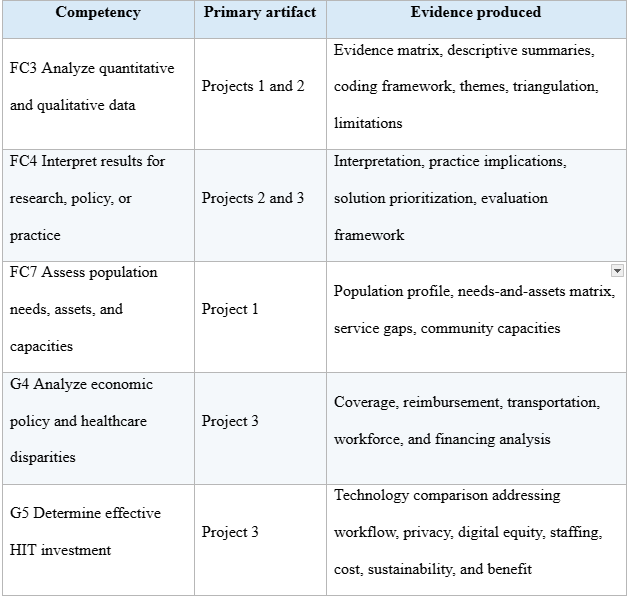
Appendix A Competency and Artifact Alignment
Appendix B Proposed Key Informant Interview Guide
The following guide is proposed for future use only after applicable approval and participant protections are established.
1. Please describe your role and experience with maternal health in Georgia.
2. What are the most consequential barriers to prenatal care for Black women in the communities you know?
3. Which barriers are most consequential after delivery, and when do gaps occur?
4. How do geography, transportation, insurance, scheduling, work, childcare, and provider availability interact?
5. How do communication, trust, racism, discrimination, or previous healthcare experiences influence care-seeking and continuity?
6. Which existing services or community assets are working well, and who is not reached?
7. Where do referrals fail or services duplicate one another?
8. Which remedy would you prioritize first, and why?
9. What roles should doulas, community health workers, navigators, home visitors, telehealth, mobile services, or transportation programs play?
10. What workforce, funding, technology, policy, and partnership conditions are required?
11. What unintended consequences or implementation barriers should be anticipated?
12. How should success be measured, and which outcomes matter most to Black pregnant and postpartum women?
13. Who else should be included before recommendations are finalized?
Appendix C Preliminary Coding Framework